


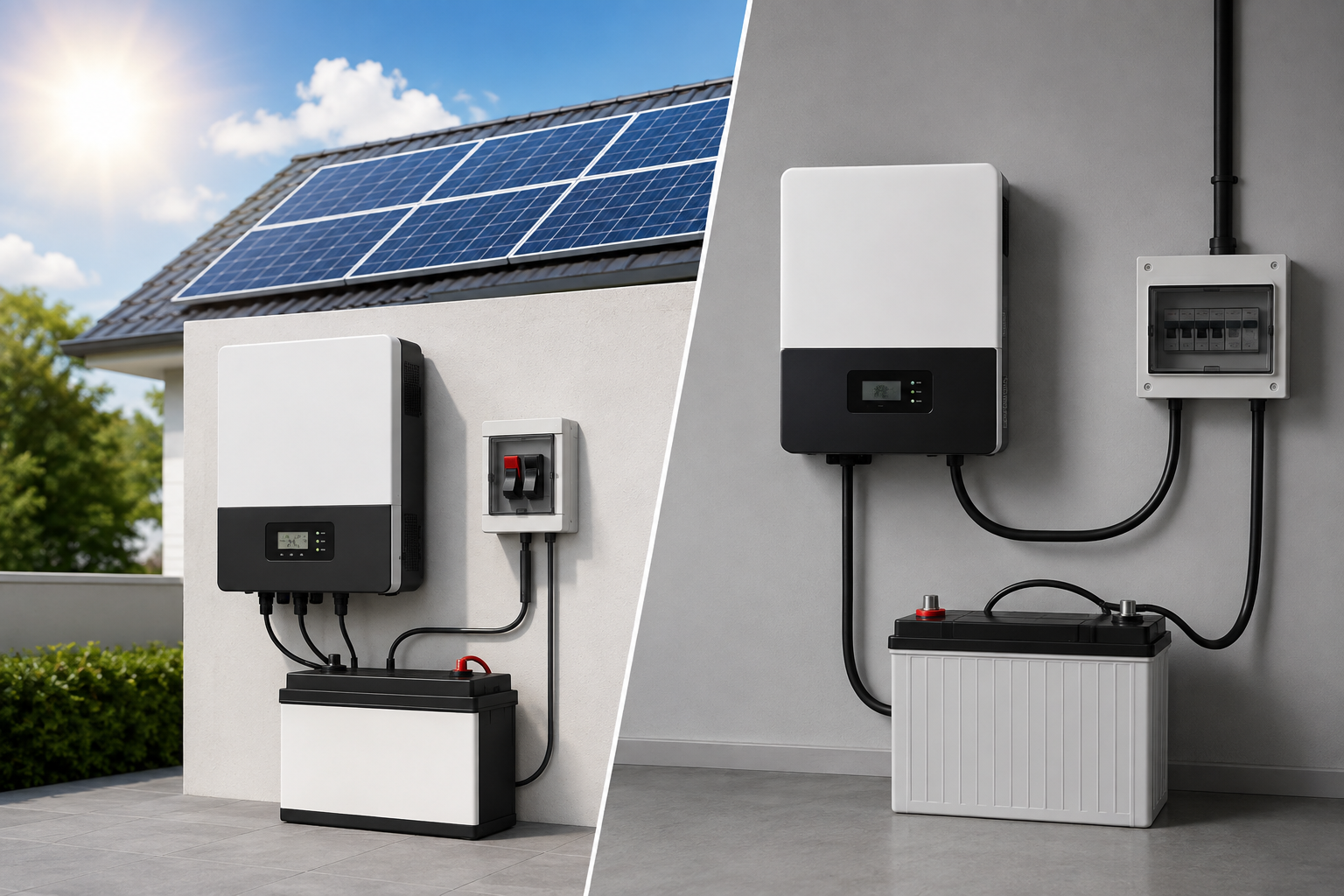

When choosing a backup power solution for your home or office, you may come across different types of inverters. Two common options are solar inverters and normal inverters. But what is the difference between them, and which one is the better choice?
In this guide, we’ll explain solar inverter vs normal inverter, how both systems work, their advantages and disadvantages, and which option may suit your electricity needs.
A normal inverter, also called a conventional inverter or battery inverter, stores electricity in a battery and supplies power to connected appliances when the main electricity supply goes off.
It generally charges its battery using electricity from the grid. When there is a power outage, the inverter automatically switches to battery power.
Normal inverters are commonly used for:
They are relatively simple to install and can provide reliable backup during power cuts.
A solar inverter is an important component of a solar power system. It converts the DC electricity generated by solar panels into AC electricity that can be used by household appliances.
Depending on the system, a solar inverter can work with solar panels, batteries, and the electricity grid. Some systems can also send excess solar electricity to the grid.
Solar inverters are commonly used in residential, commercial, and industrial solar power systems.
Understanding the difference between a solar inverter vs normal inverter can help you choose the right system.
| Feature | Solar Inverter | Normal Inverter |
|---|---|---|
| Main energy source | Solar panels and/or grid | Electricity grid |
| Solar panel compatibility | Yes | Usually no |
| Battery support | Depends on inverter type | Yes |
| Electricity bill savings | Can reduce electricity consumption from the grid | Generally does not reduce bills |
| Backup during power cuts | Yes, when battery-supported | Yes |
| Installation | More complex | Relatively simple |
| Initial investment | Usually higher | Usually lower |
| Long-term savings | Potentially higher | Limited |
| Renewable energy | Uses solar energy | Does not generate renewable energy |
Solar panels generate DC electricity when sunlight falls on them. The solar inverter converts this DC electricity into AC electricity that household appliances can use.
Depending on the type of solar system, the electricity can be:
This makes solar inverters an important part of a solar energy setup.
A normal inverter usually works together with a battery. The battery is charged using electricity from the grid while power is available.
During a power cut, the inverter draws stored energy from the battery and converts it into usable AC electricity.
For example, if you need backup power mainly for lights, fans, Wi-Fi routers, and computers during occasional outages, a normal inverter may be sufficient.
Solar inverters allow you to use energy generated from sunlight instead of depending completely on grid electricity.
A properly designed solar power system can reduce the amount of electricity you need to purchase from the grid, potentially lowering your electricity expenses.
Although the initial investment can be higher, solar power systems are designed for long-term use and can provide ongoing energy savings.
Solar energy is a renewable energy source and does not require burning fossil fuels to generate electricity at the point of use.
A normal inverter and battery system is generally less expensive to install than a complete solar power system.
Normal inverter systems are relatively straightforward and can be installed without solar panels.
If your primary concern is keeping essential appliances running during power cuts, a normal inverter can be a practical solution.
The right option depends on your electricity requirements, budget, and long-term goals.
Choose a normal inverter if:
Choose a solar inverter if:
There is no single answer because both serve different purposes.
If your main requirement is backup electricity, a normal inverter may be enough. However, if you want solar power generation, backup capability, and potential long-term savings, a solar inverter system can be a better investment.
The best choice depends on factors such as your daily electricity consumption, available roof space, battery requirements, budget, and local electricity regulations.
Understanding solar inverter vs normal inverter is important before investing in a backup or solar power system. A normal inverter is primarily designed to provide backup electricity using stored battery power, while a solar inverter allows you to use electricity generated by solar panels and, depending on the system, manage battery and grid power as well.
If your goal is simply reliable backup during power cuts, a normal inverter can be a practical choice. If you want to generate renewable energy and potentially reduce your long-term electricity costs, a solar inverter may be worth considering.
Before purchasing an inverter, compare your energy requirements, system capacity, battery needs, installation costs, and expected usage to choose the right solution for your home or business.
A solar inverter can be better if you want to generate electricity using solar panels and reduce your dependence on grid electricity. A normal inverter is suitable when your main requirement is backup power.
Most conventional inverters are not designed to directly manage solar panel electricity. A solar-compatible inverter or suitable solar inverter system is generally required.
Not always. Some solar systems operate without batteries, while hybrid and off-grid systems can use batteries for energy storage and backup.
The best inverter depends on your electricity consumption and purpose. A normal inverter can work well for basic backup, while a solar or hybrid inverter may be more suitable if you want to use solar energy.
A solar power system can reduce the amount of electricity purchased from the grid, which may lower electricity bills. Actual savings depend on system size, energy consumption, solar generation, and applicable electricity policies.