



The demand for solar certification installation Kerala is growing rapidly as homes, businesses, and industries shift toward renewable energy. With government incentives, increasing electricity costs, and rising environmental awareness, certified solar professionals are more valuable than ever.
If you're planning to become a solar installer or technician, understanding Solar technician ITI course details, certification requirements, career opportunities, and practical training is essential. This guide explains everything you need to know before starting your journey in Kerala's expanding solar industry.
Kerala has become one of India's fastest-growing solar markets. Residential rooftops, commercial buildings, educational institutions, hospitals, and industries are increasingly installing solar power systems.
Some major reasons include:
Because of this growth, certified solar technicians are now in high demand throughout Kerala.
Solar certification installation Kerala refers to professional training and certification that prepares individuals to install, inspect, maintain, and troubleshoot solar photovoltaic (PV) systems according to industry standards.
Professional certification generally covers:
Proper certification increases employer confidence and improves job opportunities.
Certified professionals enjoy several career advantages.
Companies prefer certified technicians because they already understand installation standards and safety regulations.
Certified installers generally receive higher salaries than untrained workers.
Certification demonstrates technical competency and professionalism.
Many certified technicians eventually start their own solar installation businesses.
Many students search for Solar technician ITI course details before choosing a career.
Typical course modules include:
Most programs combine classroom learning with practical hands-on training.
Generally, candidates should have:
Some advanced programs may require prior electrical training.
Depending on the institute, training may last:
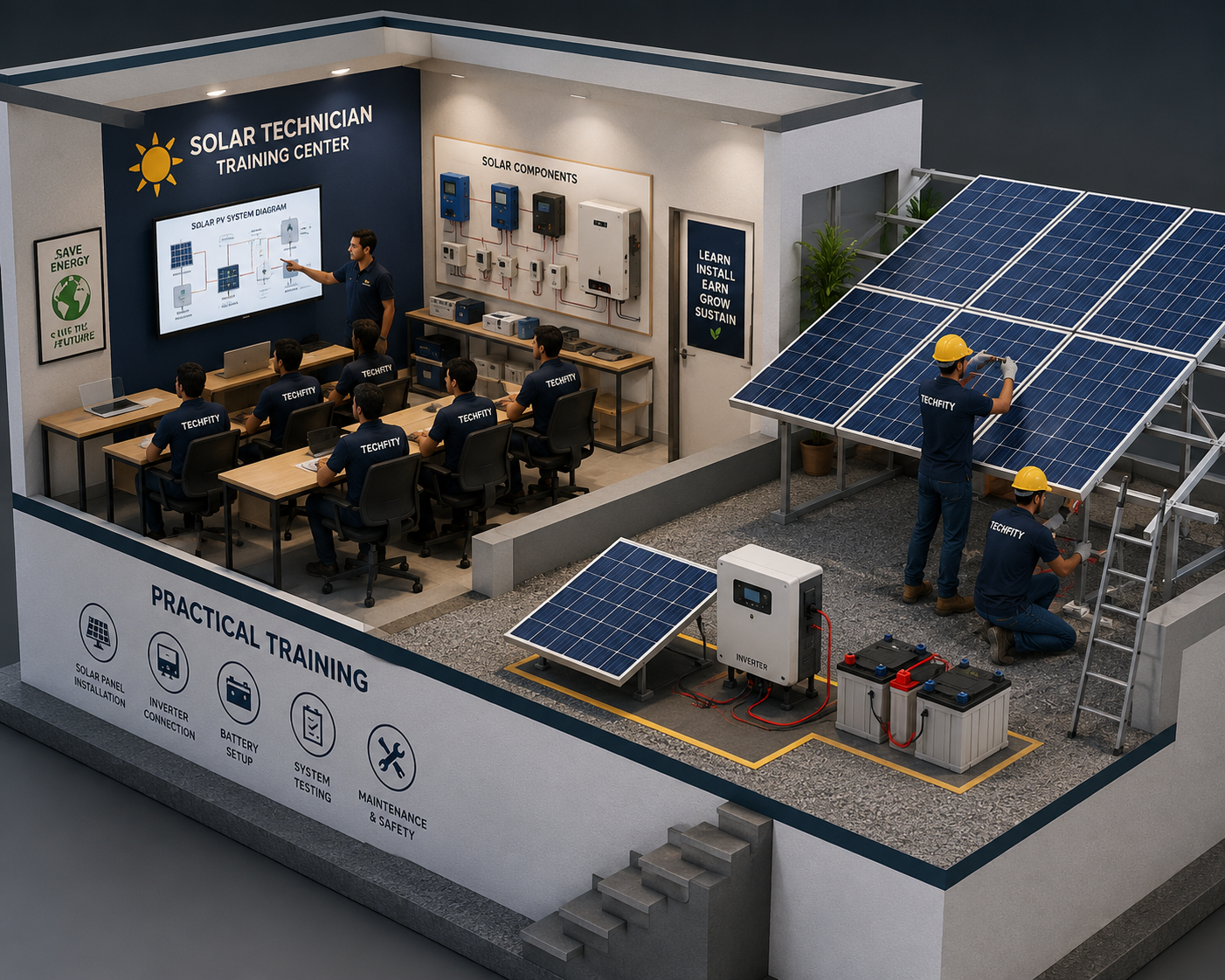
Practical training is usually the most important part.
Professional solar training develops both technical and practical skills.
After completing solar certification installation Kerala, candidates can work in many sectors.
Popular job roles include:
Many professionals also become independent contractors.
Certified technicians can work in:
Demand continues to increase every year.
Solar installation cannot be mastered through theory alone.
Good institutes provide:
Hands-on learning improves confidence and job readiness.
Some commonly used tools include:
Knowing how to use these tools safely is essential.
Safety should always come first.
Technicians should:
Proper safety training reduces workplace accidents.
The renewable energy sector is expected to create thousands of new jobs in the coming years.
Future opportunities include:
Professionals with solar certification installation Kerala will continue to enjoy strong career prospects.
Before joining any course, consider:
Choosing the right institute makes a significant difference.
It is professional training that teaches candidates how to install, maintain, and troubleshoot solar PV systems safely and efficiently.
Most institutes accept candidates who have completed 10th standard or possess an ITI qualification.
Yes. Reputed institutes include extensive hands-on installation training.
Graduates can become solar technicians, installers, maintenance engineers, supervisors, or start their own installation business.
Yes. Residential, commercial, and industrial solar projects are expanding rapidly across Kerala.
The course usually includes solar fundamentals, electrical systems, PV installation, inverter setup, safety, testing, and maintenance.
Yes. After gaining experience and certification, many professionals establish successful solar installation companies.