


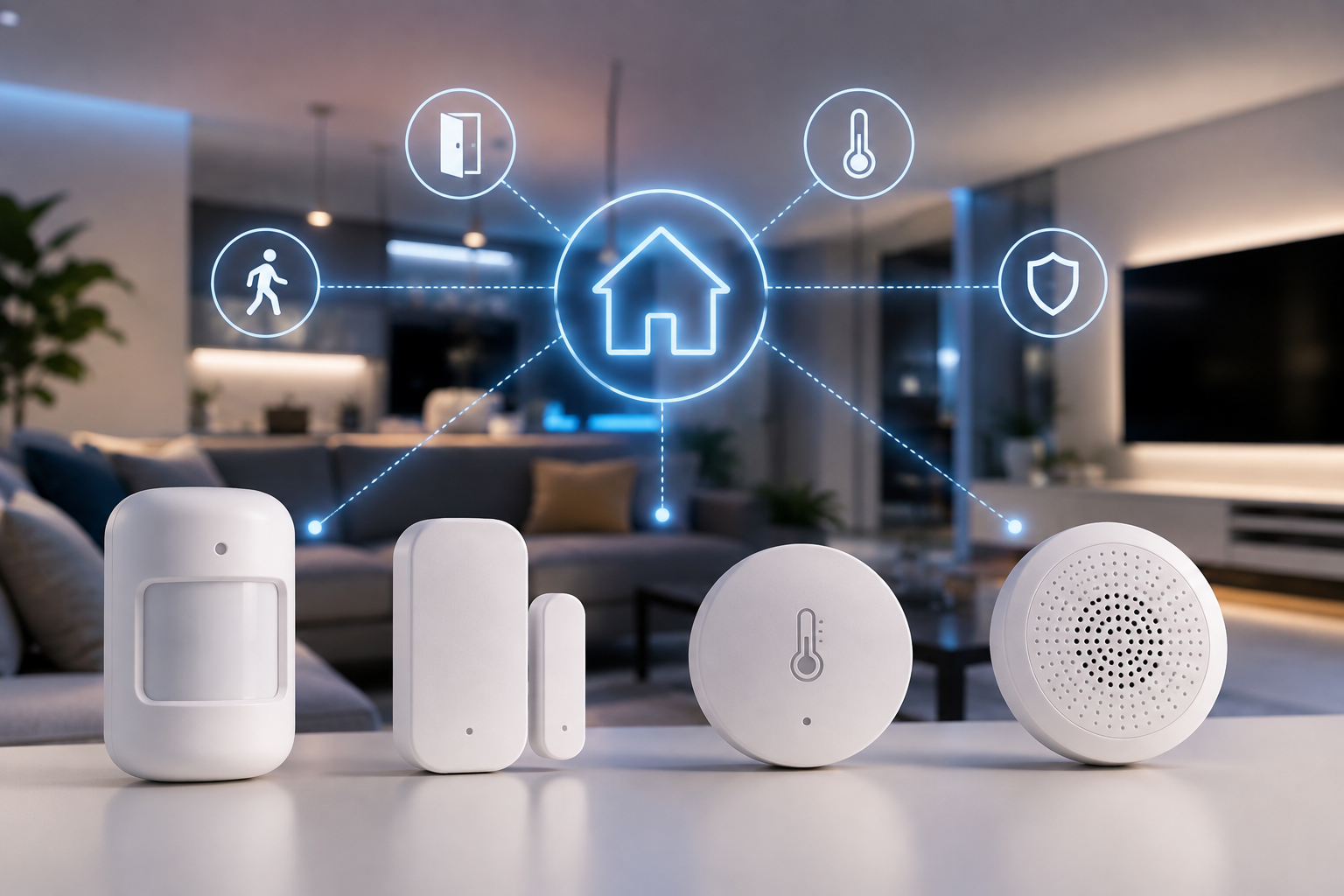

Smart home technology is changing the way people manage security, comfort, and energy consumption. One of the most important parts of a modern smart home is the smart home sensor. Sensors collect information from the surroundings and allow connected devices to respond automatically based on specific conditions.
From detecting movement to monitoring doors and measuring room temperature, different types of sensors can make a home safer, more comfortable, and more energy efficient. When integrated with a home automation system, these sensors can perform tasks without requiring constant manual control.
Smart home sensors are electronic devices that detect changes in the environment and send information to a smart home automation system. Depending on the type of sensor, they can detect movement, temperature, light, doors opening or closing, and other environmental changes.
For example, a motion sensor can detect when someone enters a room and automatically switch on the lights. Similarly, a door sensor can alert homeowners when a door is opened, while a temperature sensor can help maintain a comfortable indoor temperature.
These sensors work together with smart lights, security systems, air conditioners, alarms, and other connected devices to create an automated home environment.
There are several types of sensors that can be used in home automation. Some of the most useful include:
Motion sensors detect movement within a specific area. They are commonly used for both security and automation.
When movement is detected, the sensor can trigger connected devices such as lights, alarms, or cameras.
Common uses include:
For example, hallway lights can automatically turn on when someone walks through the area and switch off after a certain period of inactivity.
Door and window sensors are small devices that monitor whether an entry point is open or closed. They are especially useful for smart home security.
If a door or window is opened unexpectedly, the system can send an alert to the homeowner's smartphone or activate an alarm.
These sensors can also be connected to home automation routines. For instance, opening the main door could automatically turn on the entrance light.
Temperature sensors monitor the temperature inside different areas of a home. They can help smart home systems maintain a comfortable environment while potentially reducing energy consumption.
A temperature sensor can work with an air conditioner or other climate-control equipment. If the room becomes too warm, the automation system can adjust the cooling based on the configured settings.
Temperature sensors can be particularly useful in:
The biggest advantage of smart home sensors is that they allow connected devices to respond automatically to changing conditions.
Security sensors can provide an additional layer of protection. Motion sensors and door sensors can identify unusual activity and notify homeowners.
For example, if a door is opened while the security system is active, the homeowner can receive an alert immediately.
When combined with smart cameras and alarms, sensors can contribute to a more responsive home security setup.
Smart sensors can help reduce unnecessary energy use.
A motion sensor can detect when a room is empty and turn off lights automatically. Temperature sensors can provide information that helps an automated climate-control system operate according to the actual conditions.
This means devices do not always need to remain active when they are not required.
Home automation sensors reduce the need for manual control.
Imagine entering a room and having the lights turn on automatically. Or imagine receiving a notification when your main door is opened while you are away.
These simple automations can make everyday activities easier and more convenient.
Smart home sensors can also be used to create customized routines.
For example:
Motion detected → Lights turn on → No movement for a set period → Lights turn off
Another example:
Door opens → Entrance light turns on → After a few minutes → Light turns off
These automation rules can be customized according to the homeowner's needs.
Smart home sensors become even more useful when integrated with a complete security system.
A typical setup may include:
When these devices communicate with each other, homeowners can monitor different parts of their property and receive alerts when unusual activity occurs.
For example, a door sensor may detect an entry, while a nearby camera can record or provide a live view of the area.
Smart sensors can be installed in different areas depending on their purpose.
Living room: Motion and temperature sensors can help automate lighting and climate control.
Bedroom: Temperature sensors can help maintain a comfortable environment.
Main entrance: Door sensors, motion sensors, and security cameras can provide additional security.
Windows: Window sensors can notify homeowners when a window is opened unexpectedly.
Hallways: Motion sensors can automatically control lights when someone passes through.
The placement of sensors is important because incorrect positioning can affect their performance.
Using sensors as part of a home automation system can provide several benefits:
Before choosing smart home sensors, homeowners should consider the size of the property, the type of automation required, connectivity options, and compatibility with existing smart devices.
It is also important to select reliable sensors and install them in appropriate locations. A professional installation can help ensure that sensors communicate correctly with the rest of the home automation system.
Smart home sensors are an important component of modern home automation. Motion sensors can automate lighting and improve security, door sensors can monitor entry points, and temperature sensors can help create a more comfortable and energy-efficient environment.
When properly integrated with smart lighting, CCTV, alarms, air conditioning, and other connected devices, sensors can transform a traditional house into a more intelligent and responsive home.
If you are planning to upgrade your property with home automation solutions, choosing the right sensors is an important step toward building a safer, smarter, and more convenient home.