


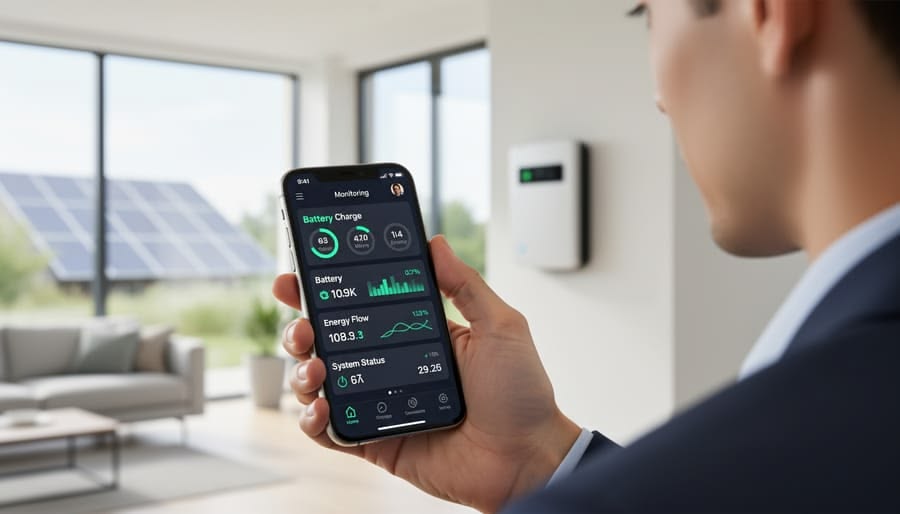

Smart home energy monitoring is becoming an important part of modern home automation. As electricity costs increase and households use more electronic devices, knowing how much energy each appliance consumes can help homeowners make better decisions about their electricity usage.
Traditional electricity meters show overall consumption, but they usually do not provide detailed information about which appliances are using the most power. Smart energy monitoring systems can provide more useful information by tracking electricity consumption and presenting it through digital displays, dashboards, or mobile applications.
For homeowners interested in smart home technology, energy monitoring can be an effective way to improve energy efficiency and reduce unnecessary consumption.
Smart home energy monitoring is a technology that tracks and measures electricity consumption within a home.
Depending on the system, homeowners may be able to monitor:
Some systems can connect with home automation platforms, allowing users to monitor and control appliances from a central interface.
Many households know their monthly electricity bill but do not know exactly where most of their electricity is being consumed.
For example, high-energy appliances such as air conditioners, water heaters, refrigerators, washing machines, pumps, and electric cooking equipment can contribute significantly to household consumption.
Energy monitoring provides better visibility into these patterns.
By understanding energy usage, homeowners can identify unnecessary consumption and change their daily habits.
A typical smart energy monitoring system uses sensors or monitoring devices installed within the electrical system.
The system measures electrical parameters such as voltage, current, power, and energy consumption.
The collected information can then be displayed through:
Depending on the system, users may receive real-time information or historical reports.
This makes it easier to understand how electricity is being used throughout the property.
One of the biggest advantages of smart home energy monitoring is visibility.
Instead of only seeing the final monthly electricity bill, homeowners can monitor consumption patterns and identify which devices are using more electricity.
This information can help households make practical changes.
Some appliances may consume more electricity than expected.
Energy monitoring can help identify unusual or excessive consumption.
For example, if an appliance continues consuming significant power when it is not actively being used, homeowners can investigate the reason and take appropriate action.
Energy monitoring can encourage better energy habits.
Users can identify unnecessary usage and adjust appliance operating times.
For example, users may discover that certain devices are being left switched on for several hours when they are not required.
Reducing this unnecessary usage can improve overall energy efficiency.
Energy monitoring systems can store consumption information.
Homeowners can compare:
This makes it easier to understand how electricity consumption changes over time.
Energy monitoring can become even more useful when integrated with home automation.
For example, automation systems can be configured to manage certain devices based on schedules, occupancy, or other conditions.
This creates a more intelligent approach to household energy management.
Home automation is not only about controlling lights, curtains, doors, and entertainment systems.
Energy management is another important application.
A smart home system can combine energy monitoring with automated control.
For example, homeowners may monitor energy consumption while using smart switches or automation modules to control selected appliances.
This creates a connected system where users can monitor and manage energy usage more efficiently.
Depending on the system and installation, energy monitoring can be used for different types of electrical loads.
Common examples include:
Monitoring individual circuits can provide more detailed information than simply measuring total household consumption.
Sensors can play an important role in smart energy management.
For example, occupancy sensors can help determine whether a room is being used.
When integrated with an appropriate automation system, this information can help manage lighting or other connected devices based on occupancy.
Temperature sensors can also contribute to smarter climate-control strategies.
Instead of operating systems unnecessarily, automation can respond to environmental conditions and user requirements.
Energy monitoring is not limited to homes.
Small businesses, offices, shops, hotels, and other commercial properties can also benefit from monitoring electricity consumption.
Commercial buildings often operate multiple systems simultaneously, making it difficult to identify where energy is being consumed.
Monitoring can help businesses understand their consumption patterns and identify opportunities for improved efficiency.
Energy monitoring can also complement solar energy systems.
Homes with solar panels may want to understand:
When solar, energy storage, and smart monitoring are integrated, homeowners can gain a clearer picture of how electricity is generated, stored, and consumed.
This can help them make better use of their renewable energy system.
The value of an energy monitoring system depends on the property and the user's requirements.
It can be particularly useful for:
For a small property with very low electricity consumption, a basic monitoring solution may be sufficient.
For larger properties, a more advanced energy management system may provide greater benefits.
Before installing a system, consider several factors.
Choose a system designed to provide reliable electricity measurements.
Real-time information can make it easier to identify changes in energy consumption.
A mobile application can make monitoring more convenient by allowing users to check consumption remotely.
If you already have a smart home system, check whether the energy monitoring solution can integrate with your existing setup.
Electrical monitoring devices may need professional installation, particularly when they are connected to electrical panels or circuits.
Choose a system that can be expanded if you plan to add more smart devices or energy systems in the future.
Electrical systems require careful installation and appropriate safety practices.
Energy monitoring equipment should be installed according to the manufacturer's specifications and applicable electrical requirements.
Professional technicians can evaluate the electrical system, determine suitable monitoring points, configure the equipment, and test the system properly.
This is particularly important for systems connected directly to electrical distribution boards.
Smart energy management is expected to become an increasingly important part of connected homes.
The combination of sensors, automation, energy storage, solar power, and digital monitoring can create more intelligent energy systems.
Instead of simply consuming electricity, homeowners can use technology to understand consumption and make more informed decisions.
As smart home technology continues to develop, energy monitoring can become an important component of modern home automation.
Smart home energy monitoring gives homeowners better visibility into how electricity is consumed.
By tracking energy usage, identifying high-consumption devices, monitoring usage patterns, and integrating with home automation systems, homeowners can work toward better energy efficiency.
Energy monitoring can also complement solar systems, battery storage, smart switches, and sensors to create a more connected energy-management environment.
For anyone planning a smart home, energy monitoring is worth considering alongside security, automation, and renewable energy solutions.