


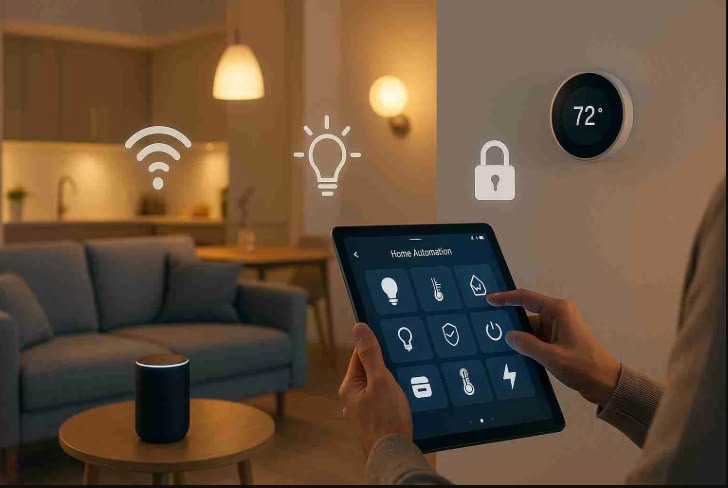

Smart home energy monitoring is becoming an important part of modern home automation. As households use more electrical appliances, air conditioners, smart devices, and entertainment systems, understanding where electricity is being consumed can help homeowners manage their energy usage more effectively.
A smart energy monitoring system can provide information about electricity consumption and help users identify appliances or periods when energy usage is higher. When combined with home automation, energy monitoring can become part of a broader smart-home management system.
Smart home energy monitoring is the process of using connected devices and sensors to measure and track electricity consumption in a home.
Traditional electricity meters generally show the amount of electricity consumed over a billing period. A smart energy monitoring system can provide more detailed information about energy usage, depending on the equipment installed.
Users may be able to monitor information through a digital display, mobile application, web dashboard, or home automation platform.
This can make it easier to understand how and when electricity is being used.
A typical energy monitoring setup may include sensors, a monitoring device, communication technology, and software.
The system measures electrical information and sends the collected data to a monitoring interface. Depending on the system, homeowners can view information such as current consumption, historical usage, or energy patterns.
A basic process can look like this:
The exact features depend on the monitoring system and its installation.
Home automation is not only about controlling lights, curtains, doors, or appliances remotely. It can also help homeowners understand how their property uses energy.
Energy monitoring adds an information layer to a smart home.
For example, a homeowner may discover that electricity consumption increases significantly during certain hours because of air-conditioning, water heating, or other high-power appliances.
Once these patterns are understood, users can make informed decisions about their electricity usage.
One of the biggest advantages is visibility.
Instead of simply receiving an electricity bill at the end of the month, homeowners can use monitoring technology to better understand their consumption patterns.
This can help answer questions such as:
Some appliances can consume significant amounts of electricity.
Energy monitoring can help users identify equipment that contributes significantly to overall consumption.
For example, if energy usage remains unusually high even when the household is using fewer appliances, further investigation may be necessary.
Energy monitoring can work alongside home automation.
Smart systems can potentially use information about consumption to support automated control strategies. For example, certain appliances may be scheduled to operate at appropriate times based on the user's requirements and system capabilities.
This creates a more connected approach to home energy management.
Homes with solar power systems can also benefit from energy monitoring.
Monitoring can help users understand the relationship between solar generation, household consumption, battery storage, and grid electricity.
Techtify provides solar energy solutions and energy storage solutions as part of its technology services.
When solar and energy monitoring systems are integrated appropriately, homeowners can gain better visibility into how their energy system is performing.
Solar power can reduce dependence on grid electricity, but monitoring remains important.
A homeowner may want to understand:
This information can help users understand their overall energy profile.
For homes with battery storage, monitoring can also provide useful information about charging and discharging patterns.
A smart home energy monitoring setup can include several components.
Sensors collect electrical information from the system being monitored.
The monitoring device processes or communicates the collected information.
Depending on the system, data may be transmitted through Wi-Fi, Ethernet, Bluetooth, or another communication method.
A digital interface allows users to view energy information.
In an integrated smart-home setup, the monitoring system may communicate with an automation controller or other connected devices.
The exact configuration depends on the property and the selected technology.
Energy monitoring is not limited to residential properties.
Small businesses, offices, shops, hotels, and other commercial spaces can also benefit from monitoring electricity usage.
Commercial buildings may have multiple rooms, appliances, lighting systems, air-conditioning units, and other electrical equipment.
Monitoring consumption can provide useful information for identifying usage patterns and managing energy-related operations.
Techtify provides automation, solar, CCTV, energy-storage, and technical training solutions for residential and commercial applications.
Energy monitoring becomes particularly useful when integrated into a larger smart-home ecosystem.
A modern automation system may include:
These technologies can work together depending on the system architecture and installation requirements.
For example, smart sensors can detect occupancy while automation systems control lighting or other connected devices. Energy monitoring can provide additional information about the electrical impact of these systems.
The usefulness of an energy monitoring system depends on the property, electricity consumption, existing automation setup, and the user's requirements.
For households that want greater visibility into electricity usage, monitoring can provide useful information that is difficult to obtain from a conventional monthly bill alone.
For smart homes with solar panels, battery storage, and multiple connected devices, energy monitoring can become an important part of the overall technology infrastructure.
Before installing an energy monitoring system, consider:
A professional assessment can help determine the most suitable setup for a particular property.
As homes become increasingly connected, energy management is likely to become a larger part of home automation.
Smart devices can provide homeowners with more information about their electricity consumption, while automation systems can help manage connected appliances and electrical equipment.
The combination of smart home energy monitoring, automation, solar power, and energy storage can create a more connected approach to household energy management.
Smart home energy monitoring gives homeowners greater visibility into electricity consumption and can help them understand how energy is being used throughout their property.
From identifying high-consumption appliances to monitoring solar energy and supporting home automation, energy monitoring can be an important component of a modern smart home.
As smart technology continues to develop, combining automation with energy monitoring and renewable-energy solutions can provide homeowners with more information and greater control over their electrical systems.