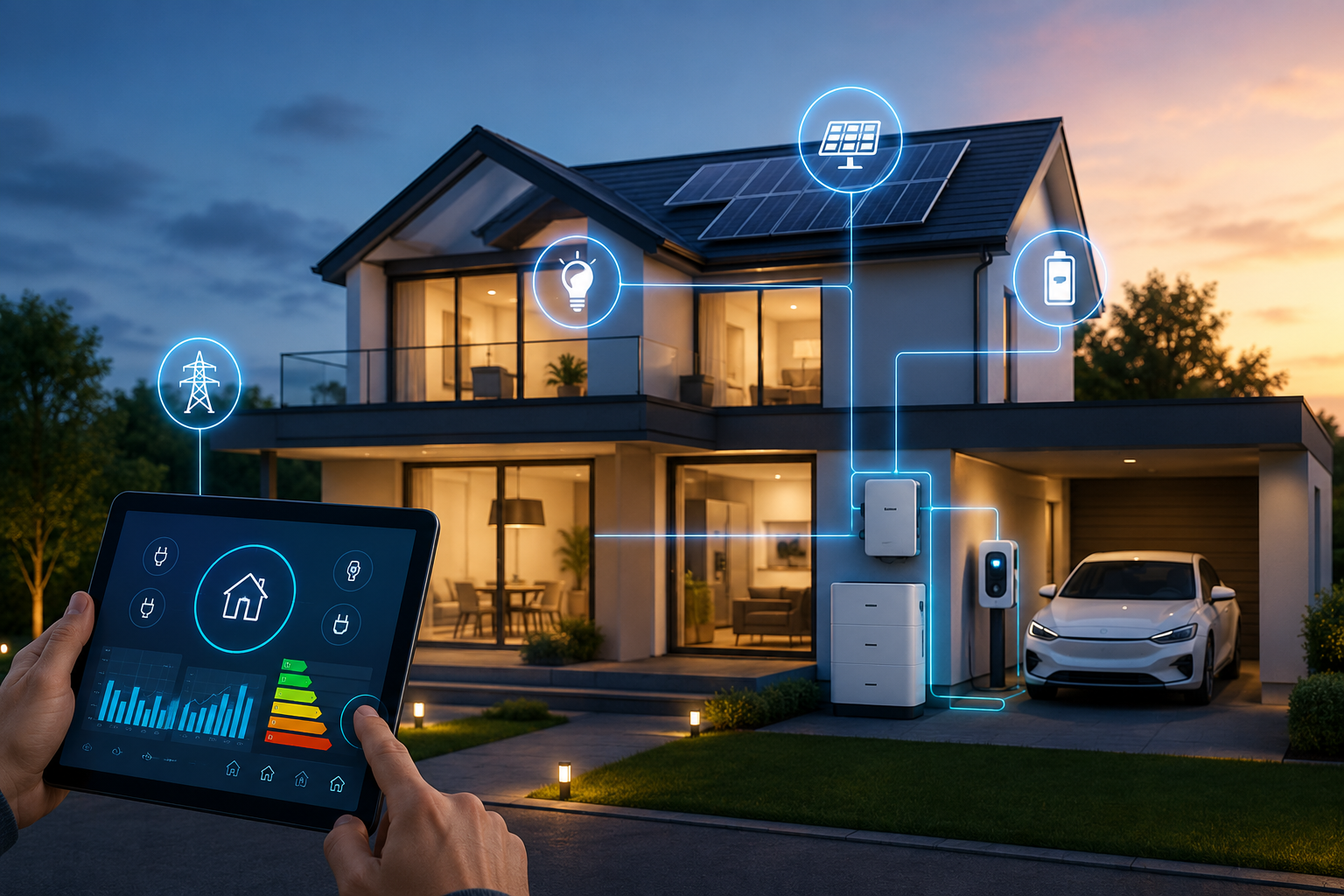
Electricity consumption is an important concern for modern homes. With the increasing use of air conditioners, appliances, lighting systems, entertainment devices, and other electrical equipment, managing energy efficiently has become more important than ever.
Smart energy management uses connected technologies to monitor, control, and optimize electricity consumption. Instead of simply using less electricity, homeowners can use technology to understand where energy is being consumed and automatically control devices for better efficiency.
From smart switches and sensors to energy monitoring systems and solar power, modern technology can help homeowners create a more efficient and sustainable living environment.
What Is Smart Energy Management?
Smart energy management is the use of technology to monitor and control energy consumption in a home or building.
A smart energy management system can help homeowners:
- Monitor electricity consumption
- Identify high-energy appliances
- Automate electrical devices
- Control lights and appliances remotely
- Reduce unnecessary energy usage
- Improve overall energy efficiency
- Integrate solar and battery storage systems
These systems can connect different electrical devices and provide better control over how and when energy is consumed.
Why Is Energy Management Important?
Many homes consume electricity unnecessarily because appliances remain switched on when they are not required. Lights, air conditioners, water heaters, and other devices can contribute significantly to energy consumption.
Smart energy management helps solve this problem by providing greater visibility and automation.
For example, smart sensors can detect whether a room is occupied and automatically control lighting. Similarly, smart devices can be scheduled to operate only during specific times.
This can make energy usage more efficient without affecting everyday comfort.
Key Technologies Used in Smart Energy Management
1. Smart Switches
Smart switches allow homeowners to control lights and electrical appliances through mobile applications, automation systems, or voice commands.
Users can also schedule devices to turn on or off automatically.
2. Energy Monitoring Systems
Energy monitoring devices provide information about electricity consumption. Homeowners can use this information to identify appliances that consume excessive power.
Understanding energy consumption makes it easier to make better decisions about electricity usage.
3. Motion and Occupancy Sensors
Sensors can detect movement or occupancy inside a room.
For example, lights can automatically switch off when nobody is present. This prevents electricity from being wasted when rooms are empty.
4. Smart Lighting
Smart lighting systems allow users to automate lighting based on schedules, occupancy, or specific conditions.
Instead of keeping lights switched on throughout the day, homeowners can create automated lighting schedules.
5. Solar Energy Integration
Solar power can work together with smart energy management systems.
A properly designed system can help homeowners use solar-generated electricity efficiently while monitoring energy production and consumption.
6. Battery Energy Storage
Battery storage systems allow excess energy to be stored and used when required.
Combining solar panels, batteries, and smart energy management can provide better control over household electricity usage.
Benefits of Smart Energy Management
Lower Energy Consumption
Automation helps prevent unnecessary electricity usage by controlling appliances based on actual requirements.
Better Control
Homeowners can monitor and control connected devices from a smartphone or centralized system.
Increased Convenience
Automated lighting, appliances, and other systems can operate according to schedules and user preferences.
Improved Sustainability
Using electricity efficiently can help reduce unnecessary energy consumption and support a more sustainable lifestyle.
Integration With Solar Systems
Smart energy management can complement solar and energy storage solutions, helping homeowners make better use of renewable energy.
How Can You Make Your Home More Energy Efficient?
You don't necessarily need to automate your entire home at once. Start with areas where energy consumption is highest.
A practical approach is:
- Identify major electricity-consuming appliances.
- Install an energy monitoring system.
- Replace conventional switches with smart switches where appropriate.
- Add motion sensors to frequently unused areas.
- Automate lighting schedules.
- Consider solar power for renewable energy generation.
- Explore battery storage for improved energy management.
- Regularly monitor electricity consumption.
Smart Energy Management and Home Automation
Smart energy management and home automation can work together to create a more efficient home.
For example, a homeowner could create an automation where lights automatically switch off when everyone leaves the house. Air conditioning can also be controlled according to schedules or occupancy.
This means automation is not only about convenience. It can also play an important role in reducing unnecessary energy consumption.
Why Choose Professional Installation?
Installing smart energy systems requires proper planning, electrical knowledge, and system integration.
Professional installation can help ensure that:
- Devices are correctly installed
- Electrical systems are safely configured
- Automation works properly
- Solar and battery systems are integrated correctly
- Users understand how to operate the system
- Future upgrades are easier
Techtify provides smart technology solutions covering home and office automation, solar energy, energy storage, CCTV, and technical training, making this topic closely aligned with its existing services.
Conclusion
Smart energy management is becoming an important part of modern homes. By combining smart switches, sensors, energy monitoring, solar power, battery storage, and automation, homeowners can gain better control over electricity consumption.
The goal isn't simply to use less electricity. It is to use energy more intelligently, efficiently, and conveniently.
For homeowners looking to modernize their electrical systems, smart energy management can be an important step toward creating a comfortable, efficient, and technology-enabled home.