


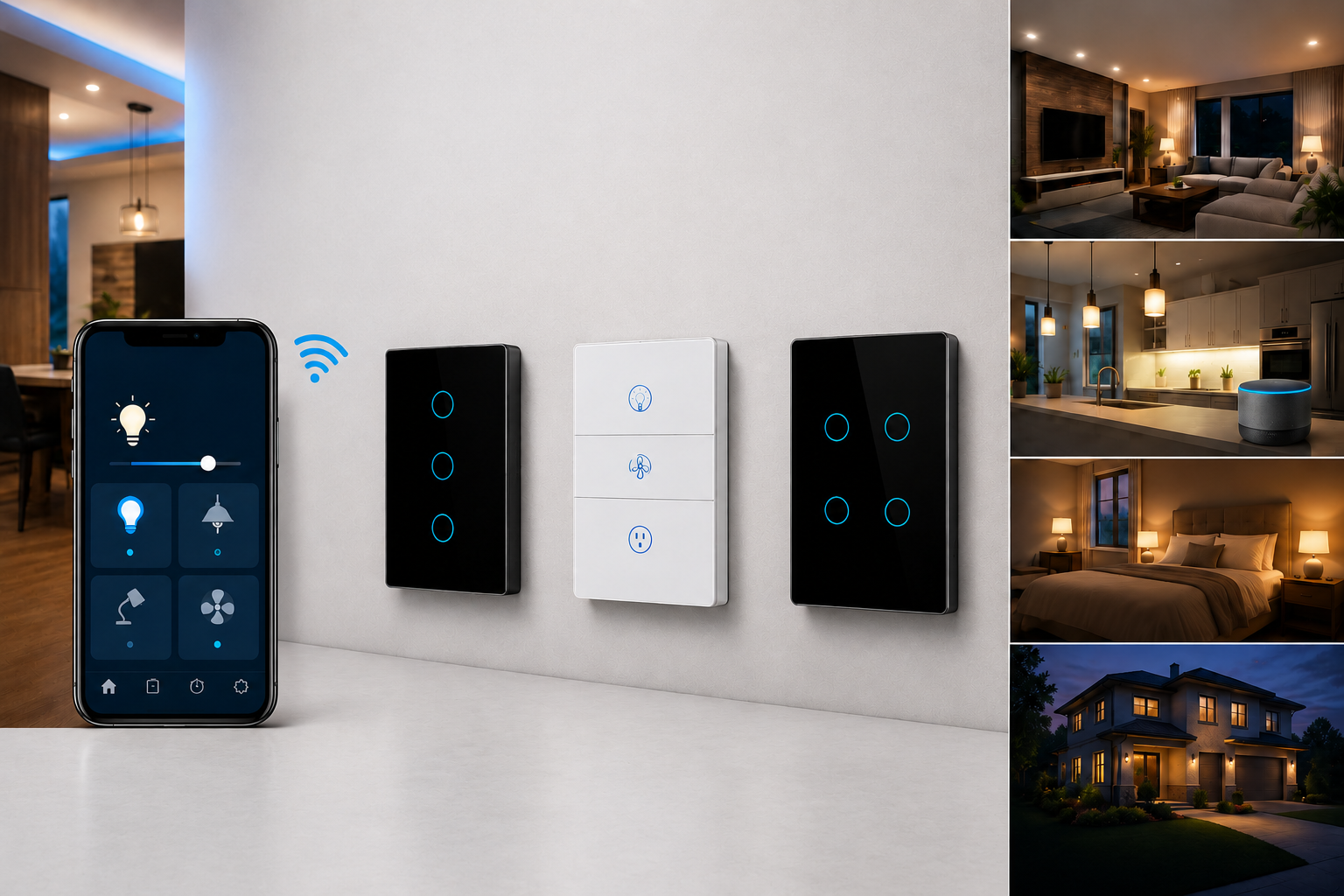

Smart home technology is changing the way people control lighting, appliances, and other electrical devices. Among the most useful components of a smart home system are home automation switches. These switches allow users to control electrical devices more conveniently using smartphones, voice commands, sensors, or automated schedules.
Whether you are building a new smart home or upgrading an existing property, choosing the right home automation switches can improve convenience, energy management, and everyday comfort.
Home automation switches are smart electrical switches that allow you to control lights and appliances automatically or remotely. Unlike traditional switches, smart switches can connect to a Wi-Fi network, smart home hub, Bluetooth, or other communication systems.
Depending on the model, users may be able to control devices through:
This makes it easier to manage different electrical devices from one place.
Smart switches are installed into the electrical system of a home and communicate with a compatible smart home platform.
For example, you can connect a smart switch to your living room lights and control them through a mobile application. You can also create an automation that turns the lights on at a specific time or switches them off automatically when you leave.
A typical setup can work like this:
Smartphone / Voice Command → Smart Home System → Automation Switch → Light or Appliance
The exact setup depends on the switch technology and the smart home ecosystem being used.
One of the biggest benefits of home automation switches is convenience. Instead of manually operating every switch, you can control connected lights and appliances from a smartphone or through voice commands.
Many smart switches allow remote control when connected to the internet. This means you may be able to switch lights or appliances on or off even when you are away from home.
Automation can help reduce unnecessary electricity usage. For example, lights can be programmed to turn off automatically when they are not required.
You can create schedules according to your daily routine. Lights, fans, and other compatible devices can be programmed to operate at particular times.
Smart switches can be integrated into different home automation routines. For example, a single command could turn off multiple lights when you are going to sleep.
There are several types of smart switches available for modern homes.
Wi-Fi switches connect directly to your home's wireless network. They are popular because they can often be controlled through smartphone applications without requiring a separate hub.
Touch switches use a modern glass or touch-sensitive interface instead of traditional physical buttons. They can provide a clean and contemporary appearance.
These switches can work with motion sensors to automatically control lights when movement is detected. They can be useful in corridors, bathrooms, garages, and other areas.
Compatible smart switches can be connected to voice assistants, allowing users to operate lights and appliances using voice commands.
Some automation switches communicate through a dedicated smart home hub. These systems can be useful for larger smart home installations where multiple devices need to work together.
Home automation switches can be installed in many areas of a home, including:
They can control lights, fans, and other compatible electrical devices depending on the switch specifications.
Traditional switches require manual operation, while smart switches provide additional control and automation features.
| Feature | Traditional Switch | Home Automation Switch |
|---|---|---|
| Manual control | Yes | Yes |
| Smartphone control | No | Usually |
| Remote operation | No | Available on compatible systems |
| Scheduling | No | Yes |
| Voice control | No | Available on compatible systems |
| Automation | Limited | Yes |
| Modern smart home integration | No | Yes |
Before purchasing smart switches, consider the following factors:
Check whether the switch works with your existing electrical system and smart home platform.
Choose between Wi-Fi, Bluetooth, Zigbee, or other connectivity options based on your requirements.
Make sure the switch is rated appropriately for the electrical load you intend to control.
Some smart switches may require a neutral wire or specific wiring configuration. Check the manufacturer's installation requirements before purchasing.
If smartphone or voice control is important to you, verify that the switch supports your preferred platform.
Choose products from reputable manufacturers and ensure they meet applicable electrical safety standards.
For homeowners who want greater control over their lighting and appliances, home automation switches can be a valuable addition. They provide features that traditional switches cannot offer, such as remote access, scheduling, automation, and smart home integration.
However, the right choice depends on your budget, electrical setup, preferred smart home ecosystem, and the number of devices you want to automate.
Home automation switches are an important part of modern smart home systems. They can make everyday tasks easier by providing remote control, scheduling, voice operation, and automated routines.
Before installing smart switches, evaluate your home's electrical wiring, connectivity requirements, device compatibility, and safety standards. With the right setup, smart switches can help create a more convenient, efficient, and connected home.
Home automation switches are smart electrical switches that allow users to control lights and compatible appliances using smartphones, voice commands, sensors, schedules, or automation systems.
Yes, many smart switches can be controlled through a compatible smartphone application when properly connected to a network.
Many models support voice control through compatible smart home platforms and voice assistants.
They can help reduce unnecessary electricity consumption by allowing users to schedule devices and automatically turn off lights or appliances when they are not needed.
Yes, many smart switches can be installed in existing homes, but compatibility with the existing wiring and electrical system should be checked before installation.