


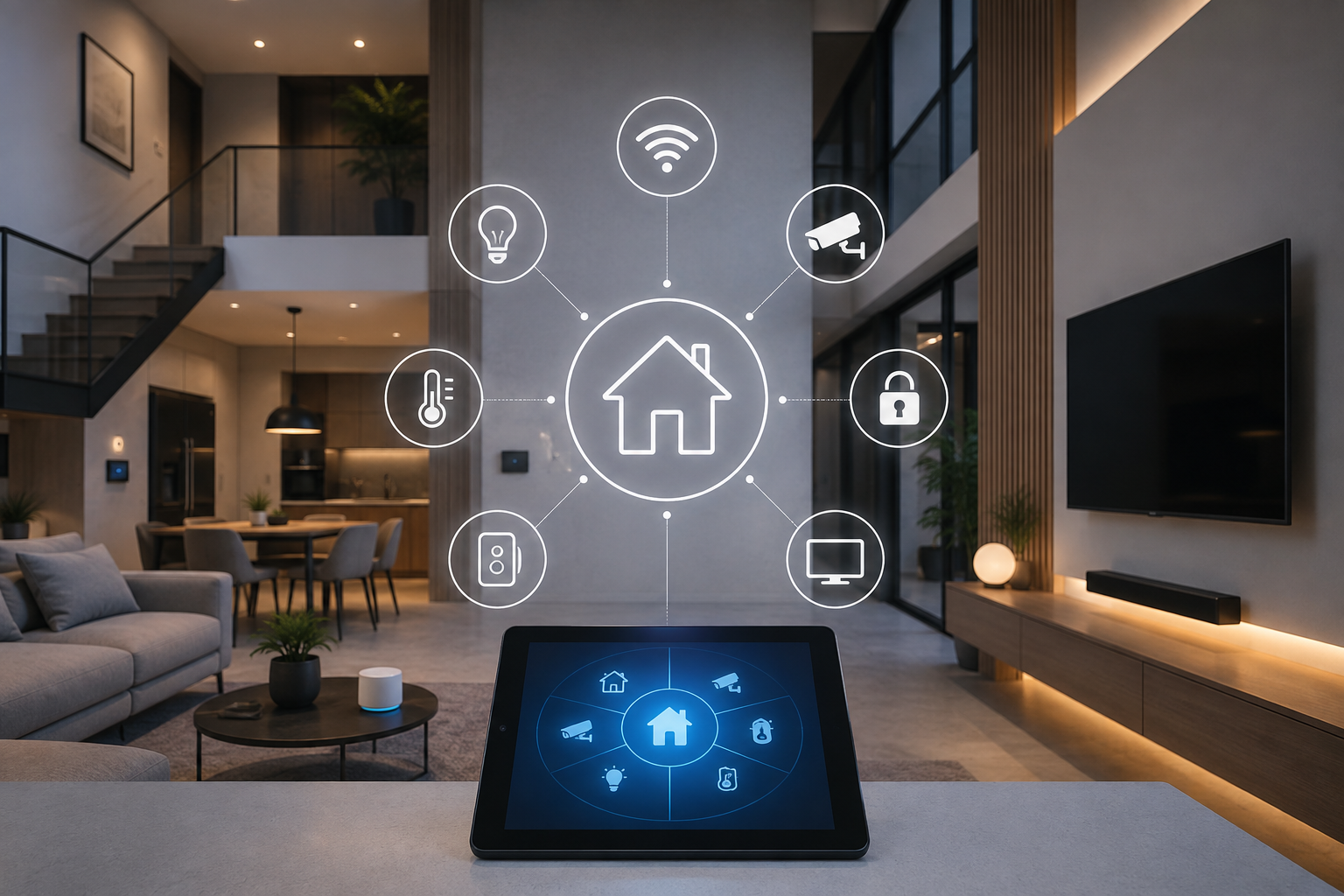

Home automation is changing the way people live by making homes smarter, safer, and more convenient. From controlling lights with a smartphone to automatically adjusting temperature and monitoring security cameras, smart home technology allows homeowners to control different devices from a single system.
As technology continues to advance, home automation is becoming increasingly popular in modern homes, apartments, offices, and commercial spaces.
Home automation is the use of smart devices, sensors, controllers, and connected technologies to automatically manage different functions of a home.
With a home automation system, you can control devices such as:
Many systems can be controlled using a smartphone, tablet, voice assistant, or centralized smart home control panel.
A typical home automation system connects smart devices through a central controller or communication network. Users can then control these devices through a mobile application, remote control, or voice commands.
For example, you can create an automation where your lights turn on automatically when you enter a room. Similarly, curtains can close at a particular time, or security cameras can send notifications when unusual activity is detected.
Modern systems can also use sensors to respond automatically to changes in the environment.
One of the biggest advantages of home automation is convenience. Instead of manually operating multiple switches and devices, homeowners can control them from one application or through voice commands.
Smart security systems can include CCTV cameras, smart door locks, motion sensors, video doorbells, and alarms. These devices can help homeowners monitor their property remotely.
You can receive notifications on your smartphone when motion is detected or when someone attempts to access your property.
Smart lighting, air conditioning, and electrical appliances can be programmed to operate only when required. This can help reduce unnecessary energy consumption.
For example, smart lights can automatically switch off when nobody is present in a room.
Home automation allows you to monitor and control your home even when you are away. Depending on the system, you can turn lights on or off, check security cameras, lock doors, or control other connected devices remotely.
Smart homes can automatically adjust lighting, temperature, curtains, and entertainment systems according to your preferences.
You can create different settings for activities such as watching movies, sleeping, working, or relaxing.
Smart switches allow users to control lights and electrical appliances through smartphones, remotes, or voice commands.
Smart lighting systems provide control over brightness, scheduling, and sometimes color. Users can create different lighting scenes for different situations.
Smart locks provide keyless access using methods such as PIN codes, mobile applications, cards, or biometric authentication, depending on the system.
Automated curtains can open and close according to a schedule, remote command, or automation routine.
Smart CCTV systems allow homeowners to monitor their property remotely and receive alerts when motion or other activity is detected.
Motion, temperature, smoke, water-leak, and door sensors can help automate different functions and improve home safety.
Home automation can be installed in different types of properties.
Smart lighting, locks, curtains, CCTV, and security systems can make apartments more convenient and secure.
Larger homes can integrate lighting, security, gates, curtains, air conditioning, and multiple rooms into one centralized automation system.
Luxury villas can use advanced automation solutions for lighting scenes, entertainment, security, climate control, automated gates, and access control.
There are two common approaches to installing home automation systems: wired and wireless.
Wired automation can be suitable for new buildings where electrical wiring can be planned during construction.
Wireless automation can be useful for existing homes because many devices can be installed without extensive rewiring.
The best option depends on the property, budget, requirements, and type of automation system.
The cost of home automation depends on several factors, including:
A basic smart lighting setup can cost significantly less than a complete smart home system that integrates security, lighting, climate control, curtains, entertainment, and access control.
Therefore, it is better to plan the requirements before choosing an automation system.
For homeowners looking for greater convenience, security, energy management, and remote control, home automation can be a valuable investment.
You do not necessarily need to automate the entire house at once. You can start with smart lighting or security and gradually add more devices as your requirements increase.
Before selecting a home automation provider, consider the following:
A professional installation can help ensure that your smart home system works reliably and can be upgraded when needed.
The future of home automation is moving toward more intelligent and connected homes. Artificial intelligence, voice control, sensors, and connected devices are making automation systems more responsive and personalized.
Future smart homes are expected to become better at understanding user habits and automatically adjusting different functions based on daily routines.
Home automation offers a combination of convenience, security, energy management, and comfort. From smart switches and lighting to CCTV cameras, automated curtains, smart locks, and sensors, homeowners can create a system that matches their lifestyle and requirements.
Whether you are building a new house or upgrading an existing property, starting with a well-planned automation system can help you move toward a smarter and more connected home.
Home automation is a technology that allows homeowners to automatically monitor and control devices such as lights, appliances, security systems, curtains, and other connected equipment.
The main benefits include convenience, improved security, remote access, energy management, and increased comfort.
Yes. Many wireless smart home products can be installed in existing homes without major structural changes.
Yes. Many modern home automation systems provide smartphone applications that allow users to monitor and control connected devices remotely.
The cost varies depending on the number of devices, type of system, installation requirements, and level of customization. A basic system can be expanded gradually according to your budget.