


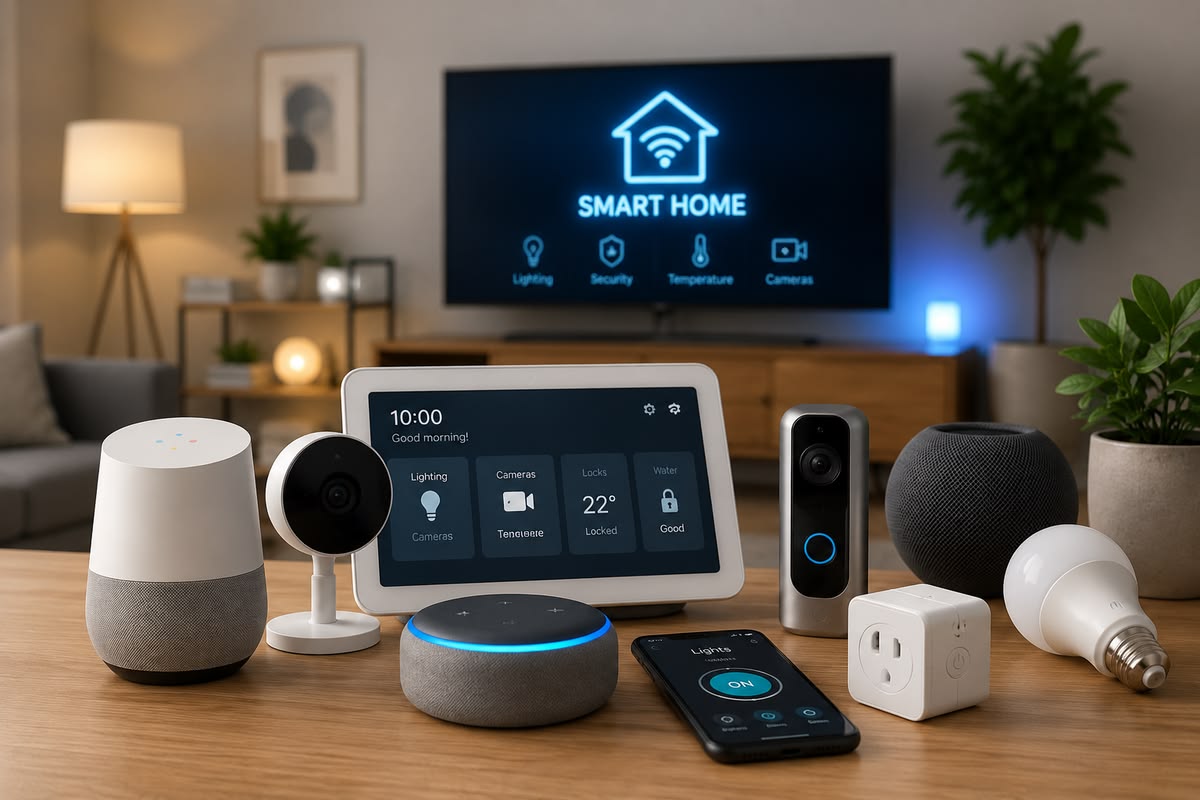

Technology is making homes smarter, safer, and more convenient than ever. Home automation allows homeowners to control lighting, security, electrical appliances, entertainment systems, curtains, and other devices through smart technology.
Whether you are building a new home or upgrading an existing property, a smart home automation system can improve comfort, security, and energy efficiency while giving you greater control over your home.
Home automation is a technology that connects different electrical and electronic devices in a home so they can be monitored and controlled automatically.
Instead of manually operating every switch or appliance, homeowners can use a smartphone, tablet, remote control, voice assistant, or smart control panel.
For example, you can:
The demand for smart homes is increasing because homeowners want better convenience, security, and energy management.
Traditional electrical systems require manual operation, while smart systems can respond automatically to schedules, sensors, or user commands.
For busy homeowners, this means many everyday tasks can be simplified with automation.
One of the biggest advantages of home automation is convenience. You can control multiple devices from a single application instead of operating each device separately.
For example, a single command can turn off the lights, switch off selected appliances, close curtains, and activate security systems when you leave home.
Smart security is an important part of modern home automation.
A smart home can integrate:
These technologies can help homeowners monitor their property and receive alerts when unusual activity is detected.
Home automation can help reduce unnecessary electricity consumption.
Smart lights and appliances can be scheduled to operate only when required. Motion sensors can also turn lights off automatically when a room is empty.
This makes smart automation useful for homeowners who want better control over their energy usage.
Modern home automation systems can allow homeowners to monitor their property remotely.
Whether you are at work, travelling, or away from home, you may be able to check cameras, control lights, or manage connected devices through a smartphone application.
Smart technology can create a more comfortable living environment.
You can customize lighting, temperature, curtains, entertainment, and other devices according to your daily routine.
For instance, you could create a "Movie Night" scene that adjusts the lights, closes the curtains, and activates your entertainment system with a single command.
Smart lighting allows you to control lights using an app, voice command, sensors, or automated schedules.
You can also create different lighting scenes for bedrooms, living rooms, kitchens, and outdoor areas.
Smart switches replace or complement traditional switches and allow connected lights and appliances to be controlled remotely.
Motorized curtains can be opened and closed using remote controls, applications, schedules, or automation routines.
Smart locks provide convenient access without relying only on traditional keys. Depending on the model, they may support PIN codes, cards, smartphones, or biometric access.
Integrating CCTV with a smart home system can make security monitoring more convenient. Users can monitor cameras and receive notifications through compatible devices.
Sensors can detect movement, temperature, light levels, doors opening, water leaks, and other conditions. These sensors can trigger automated actions based on predefined settings.
Home automation is not limited to newly constructed properties.
For new construction, automation can be planned during the electrical and interior design stages. This can make it easier to install centralized systems and organize wiring.
Existing houses can also be upgraded with wireless or retrofit smart devices. This allows homeowners to introduce automation without completely redesigning their electrical system.
The right solution depends on the home's structure, electrical setup, budget, and automation requirements.
There are two common approaches to smart home installation.
Wired home automation uses dedicated wiring between devices and controllers. It can be a suitable option for new construction and large projects.
Wireless home automation communicates using wireless technologies and can be easier to install in existing homes.
A professional assessment can help determine which approach is appropriate for a particular property.
Before investing in a smart home system, consider your specific requirements.
Decide which areas you want to automate first, such as lighting, security, air conditioning, curtains, or entertainment.
Choose a system that can accommodate additional smart devices in the future.
Make sure your smart switches, sensors, security devices, and controllers can work together properly.
Connected devices should be configured with appropriate passwords, updates, and network security measures.
Consider both the initial installation cost and long-term maintenance requirements before choosing a solution.
For many homeowners, home automation can provide long-term value through convenience, security, and better control of household devices.
You do not need to automate everything at once. Starting with smart lighting, security cameras, or smart switches can be a practical way to experience the benefits before expanding the system.
The future of home automation is moving toward more intelligent and interconnected homes.
Artificial intelligence, sensors, voice control, smart appliances, and connected security systems are helping automation become more personalized.
As these technologies develop, smart homes are expected to become increasingly capable of understanding routines and automatically adjusting different aspects of the home.
Home automation provides a smarter way to manage everyday household functions. From lighting and security to curtains, appliances, sensors, and climate control, smart technology can make homes more convenient, secure, and efficient.
Whether you are planning a new smart home or upgrading an existing property, choosing the right automation solutions can help create a comfortable and connected living environment.
Home automation is used to control and automate lighting, security, appliances, curtains, climate systems, entertainment, and other connected devices.
Yes. Wireless and retrofit smart devices make it possible to add automation to many existing homes.
Smart automation can help reduce unnecessary energy consumption by scheduling devices and automatically switching off lights or appliances when they are not needed.
Many modern home automation systems allow compatible devices to be monitored and controlled remotely through smartphone applications.
Yes. Smart switches, lighting, locks, CCTV, sensors, and other solutions can be installed in apartments depending on the building and electrical setup.